To read the Greek version please go to Ο φάρος του Αγίου Νικολάου
To the visitors of the blog,
I started urban travel tales in May 2012. I was inspired by the combination of travelling while tales and images unfold, with the wealth of Cultural Heritage and the Protection of the Environment.
The blog has been awarded 3 times – see blog pages, ‘Awards’.
The texts – result of thorough research and personal experience – appear here for the first time, are first published here, with my editing in both languages En/Gr. My photos from camera or mobile.
My approach is that of a traveller’s wandering to explore, acquaintance with the place, in juxtaposition to the touristic, thoughtless consumerism.
I always refer to the source in case of a borrowed extract or photograph.
All republishing or reproduction of the content of the blog urban travel tales is covered by copyright.
Happy browsing!
Lisa Samloglou
2013 © Copyright. All rights reserved
first published 24 August 2012, revised September 2024
My reading on Lighthouses
Surrounded by the sea, lighthouses stand upright on top of rocks, at the mercy of weather. The light flashes at regular frequency sending out messages of their presence, lonely, austere, minimal.
They send out signals in the darkness, predictable in their recurring rhythm, making navigation more secure, alarming about hidden dangers, the underwater reefs.
Lighthouses mark the ending of a peninsula, of a land.
They are the first to welcome us when we arrive by sea to a new destination.
There is an atmosphere of liminal space around them. Whether it derives from their spacial architecture or from our mental or visual associations that spring from literature, from fiction, from films or other artistic expression, lighthouses emanate an element of the eerie, the uncanny.
There are transitional spaces, a bit detached from reality, as if they are not rooted to a specific location or time frame.
Lighthouses create their own container; an in-between cradle, a threshold.

The Lighthouse of Agios Nikolaos Keas, at the end of the penninsula of Kokka defines the bay of Vourkari, one of the safest natural ports in Mediterranean.
The lighthouse stands opposite the central port, and with the little church of Saint Nicolas, protector of the mariners, supervise the port of Korissia. The lighthouse was built on the ruins of a temple of Poseidon. Together with the church of Agios Nicolas attached to it they create a white rocky construction.

Built in 1831 by The French Company of Lighthouses, it is one of the two oldest beacons in the Greek network. The Lighthouse of Kea is the first that has ever been lit in the Cyclades and the second in Greece. It belongs to the traditional Greek beacons, the square type, with a height of 8 meters and focal height 32 meters.
Kokka
In place of the prosperous industrial community of Kokka today there are only ruins. At the end of the 19th c. the British owners had installed warehouses and housing facilities to supply the steamboats with coal, on their way to the busy ports of the time, as Syros or Chios.
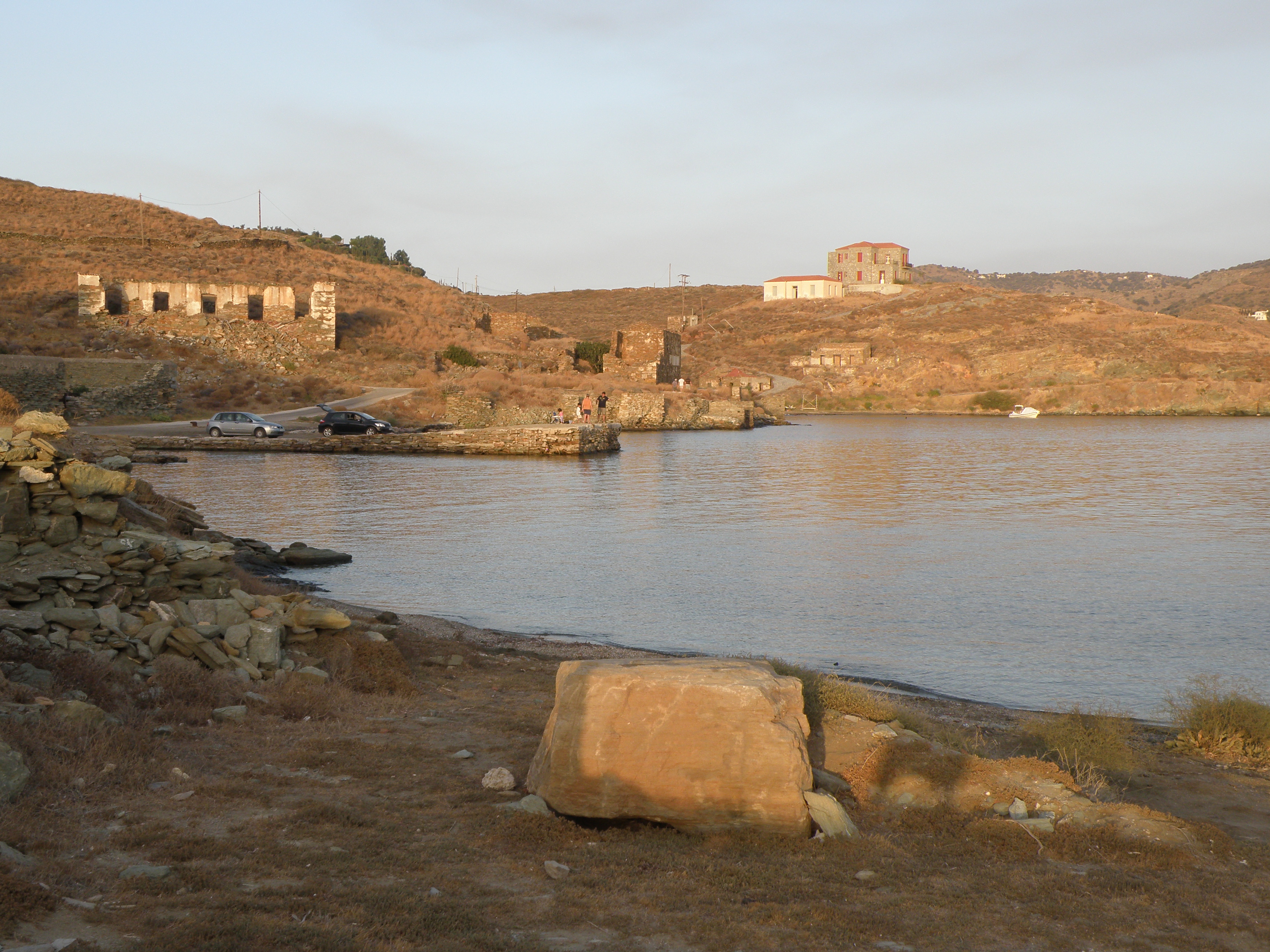
The passage of Lambros Katsonis
According to history, in August 1789 captain Lambros Katsonis pulled his ship smeared with pig fat over wooden planks laid on the rocky soil of the passage, at the exact point where a marble rememberance column stands.
He succeeded in escaping the Turks who had trapped him with their fleet in the gulf of Vourkari. However, this man, who had turned from officer of the Russian forces into a pirate in order to combat the Turks in the Aegean, was meant to be in a horrific place afterwards.
One does not need much imagination to picture his revulsion when he heard about the reverberation, the punishment that had fallen on the islanders by the rage of the Turks when they found out about the escapade of Katsonis.
One of the most impressive sunsets on the island.
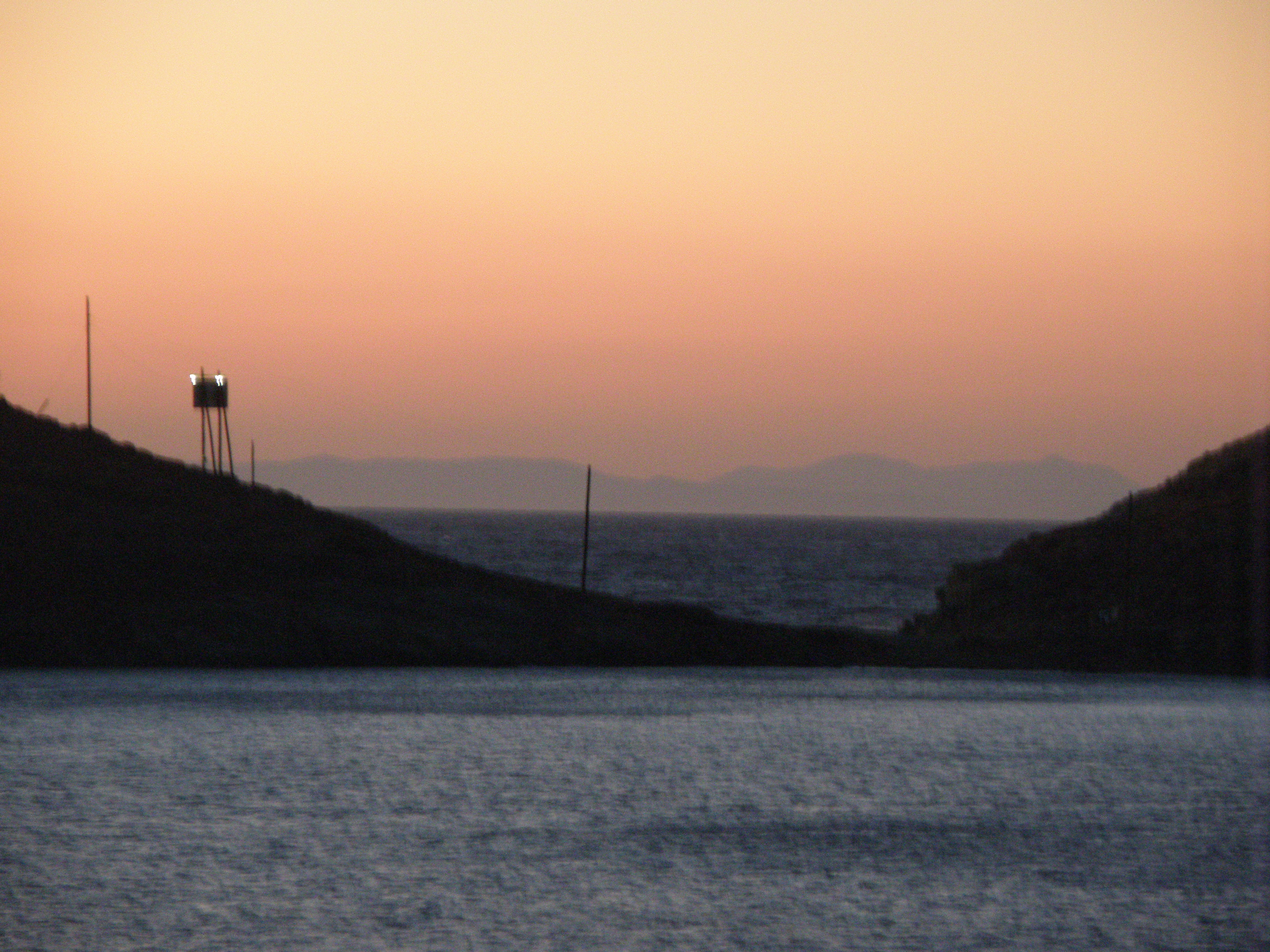

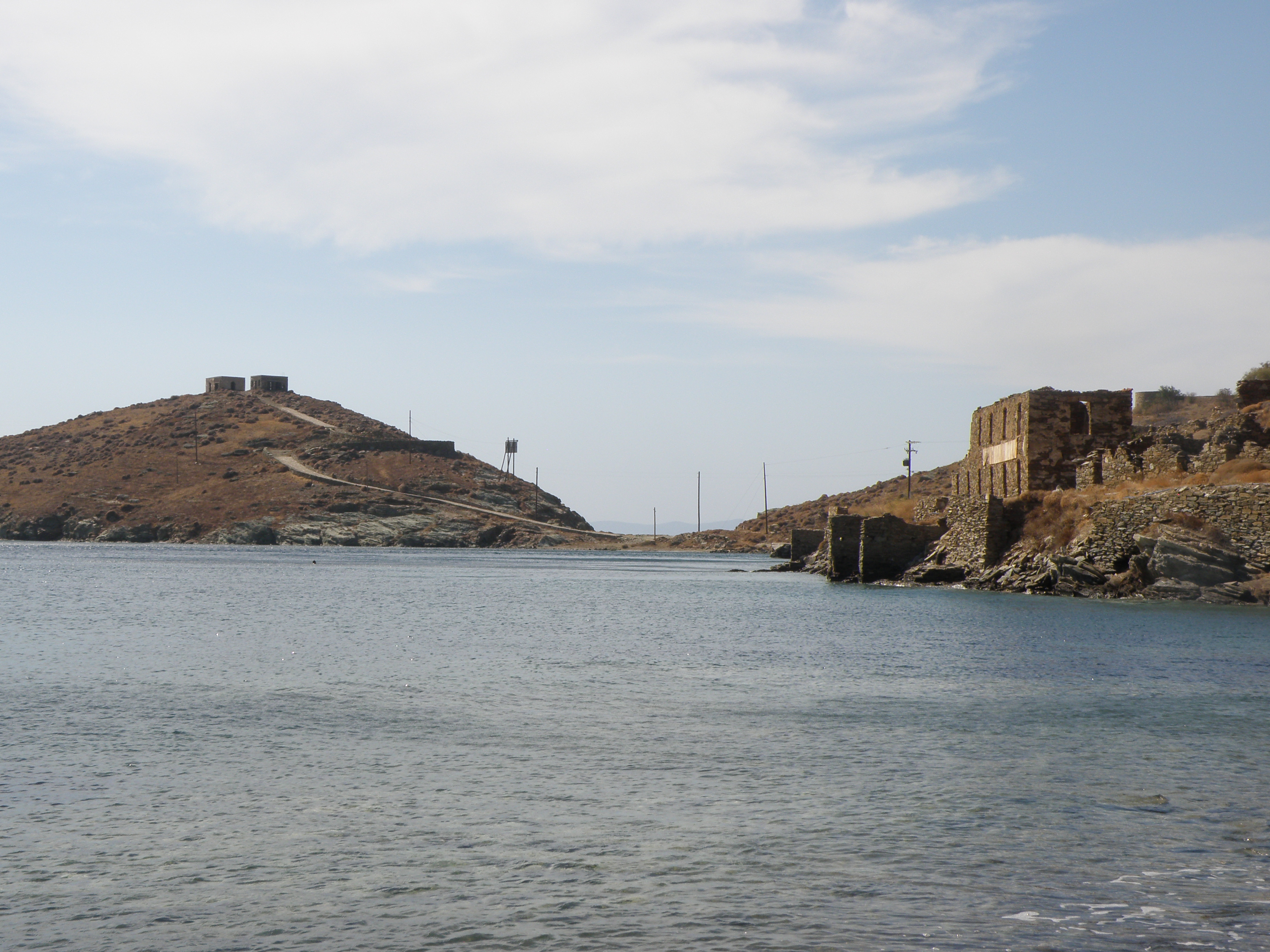
The peninsula lies like a dormant camel with two hunches. On top of the one, stand with no doors or windows, bare, wind-withered two cubes. Their position ensures supervision inside and outside of the harbor. Here they were standing those of the harbor staff assigned to signal for the arrival of the boats (simatoreio) and to navigate the boats safely (pilotagio). path to the Lighthouse.


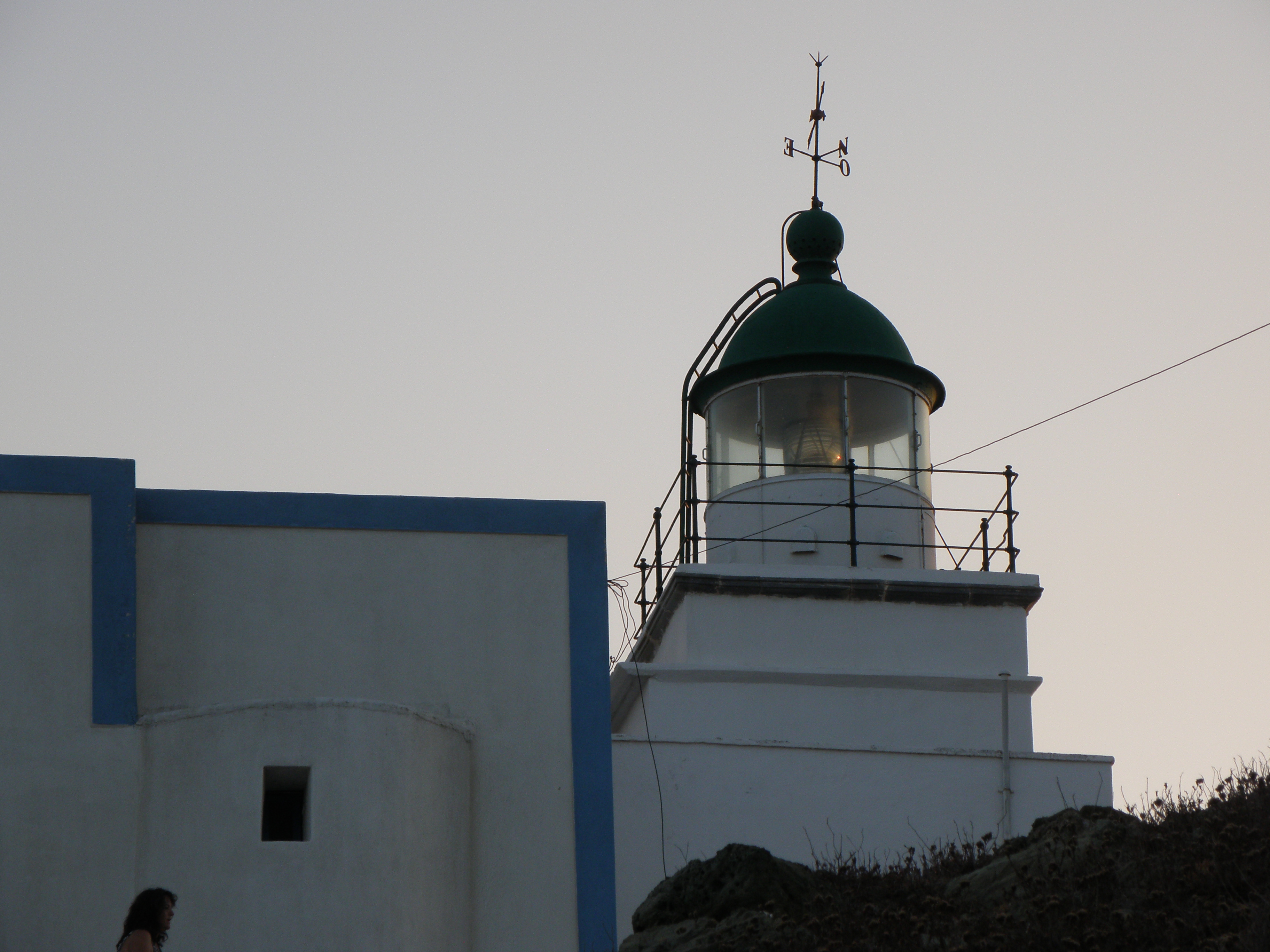


Walking to the Lighthouse is an ever changing experience.
The light, the wind, my mood compose a different scenery.
Do you recall scenes from films set on lighthouses?
Have you read Virginia Woolf’s novel ‘To the Lighthouse’?
If you wrote your own script which atmosphere would you chose?
Do not miss to visit the excellent site www.faroi.com presenting the Greek Lighthouses.
Closing with a friendly reminder:
Regardless of your opinion about the blog and the post, you probably agree that respect for the work, the time, the energy and MERAKI (no English equivalent, renders the feeling of tender to passionate engagement) that each blogger invests, without financial or other returns, is a matter of honesty. The content of the blog is product of intellectual property covered by copyright.
Please refer to the source, that is my blog, when you share or repost is whenever you repost texts, photos, material or the post itself.
Thank you, wishing you happy travelling!
2013 ©Copyright. All rights reserved
Wander in the island of Kea/Tzia through my blog posts:
Rewarding stops at Chora or Ioulida of the Cycladic island of Kea
Walking the trail to the ancient Karthea
Archaeology, Mediterranean:
Athens hosts ‘Princesses’ of Mediterranean at the Museum of Cycladic Art
Narratives with my photos from Kea:
Creative Work: ‘Mad Love Goes to the Beach’ by Lisa Samloglou
Walking by the sea after a long winter…
A tree is blooming at the island of Kea
On Travelling: the tradition, the culture, books
why-did-i-start-this-blog-why-you-should-follow-this-blog
every-sound-traveler-conceives-all-the-time-the-country-heshe-is-traveling-n-kazantzakis


 Urban travel tales
Leave a reply to Οι Κόρες της Κέας και η Αγία Ειρήνη – Urban travel tales Cancel reply