Για να διαβάσετε την Ελληνική έκδοση: http://goo.gl/P3iIiN
To the visitors of the blog,
I started urban travel tales in May 2012. I was inspired by the combination of travelling while tales and images unfold, with the wealth of Cultural Heritage and the Protection of the Environment.
The blog has been awarded 3 times – see blog pages, ‘Awards’.
The texts – result of thorough research and personal experience – appear here for the first time, are first published here, with my editing in both languages En/Gr. My photos from camera or mobile.
My approach is that of a traveller’s wandering to explore, acquaintance with the place, in juxtaposition to the touristic, thoughtless consumerism.
I always refer to the source in case of a borrowed extract or photograph.
All republishing or reproduction of the content of the blog urban travel tales is covered by copyright. Happy browsing!
Lisa Samloglou
2013 © Copyright. All rights reserve
published 8 August 2012 – revised 2019, 2024 © Copyright 2012. All rights reserved
Impressions and photos from my visit to the Museum
7 min read time
I visit the Archaeological Museum of Kea at Ioulida, the capital of the Cycladic island of Kea/Tzia, on a chilly day in July. From the open windows of the galleries the breeze distorts the elongated shadows swimming on the sky blue walls; a wooden shutter is banging rhythmically against the wall.
I am the only visitor apart from a young man who passes silently and disappears.

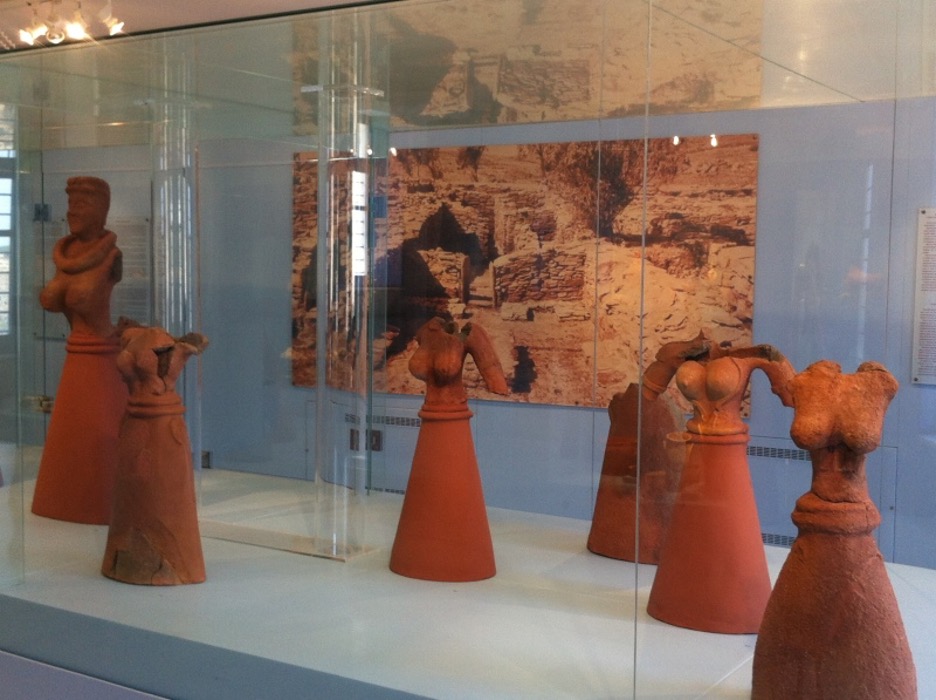
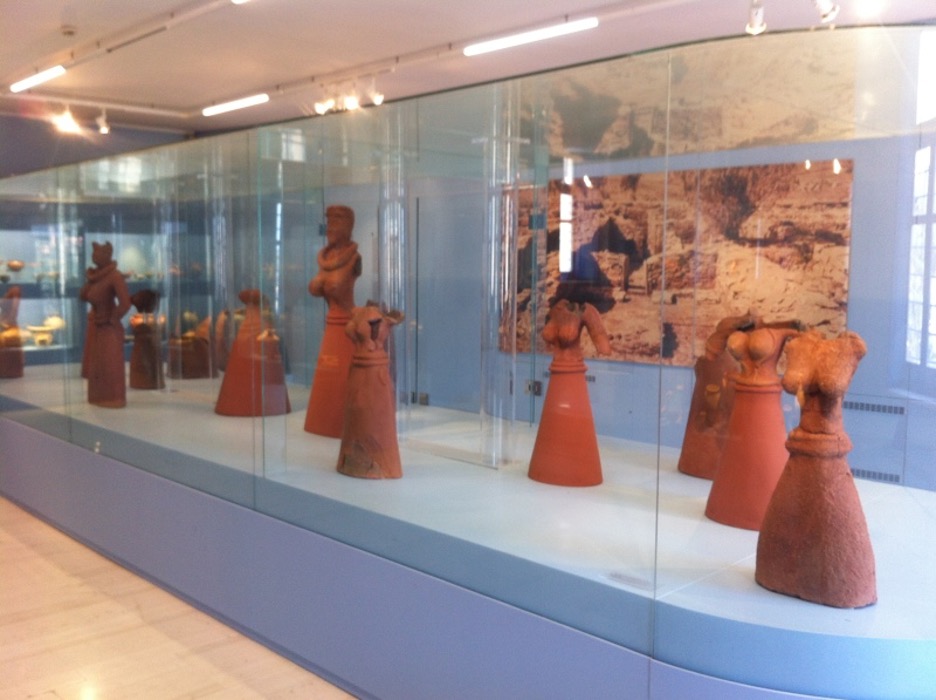
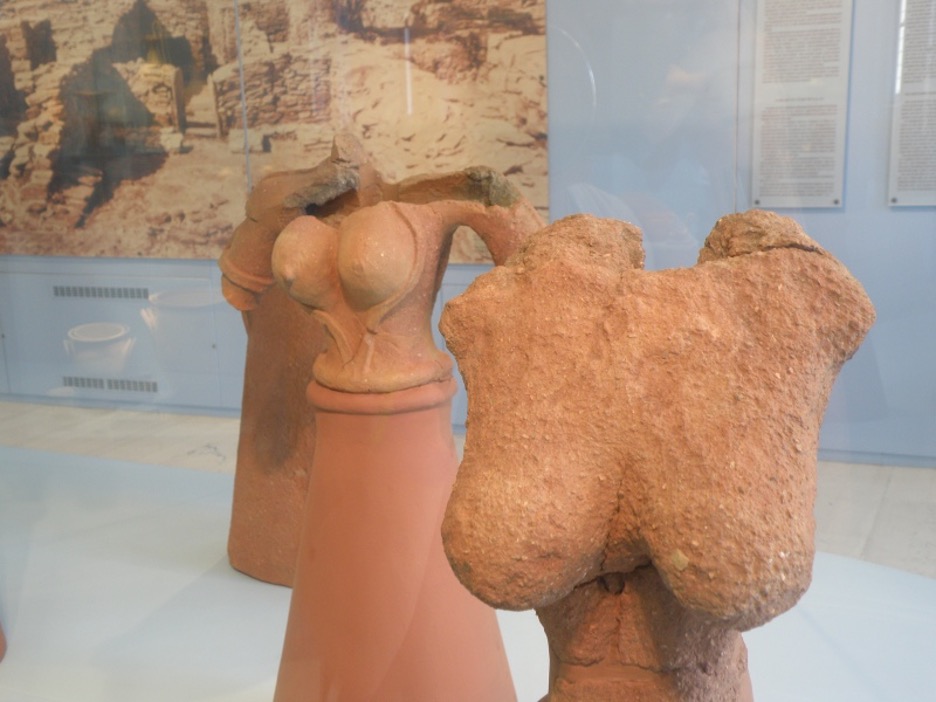
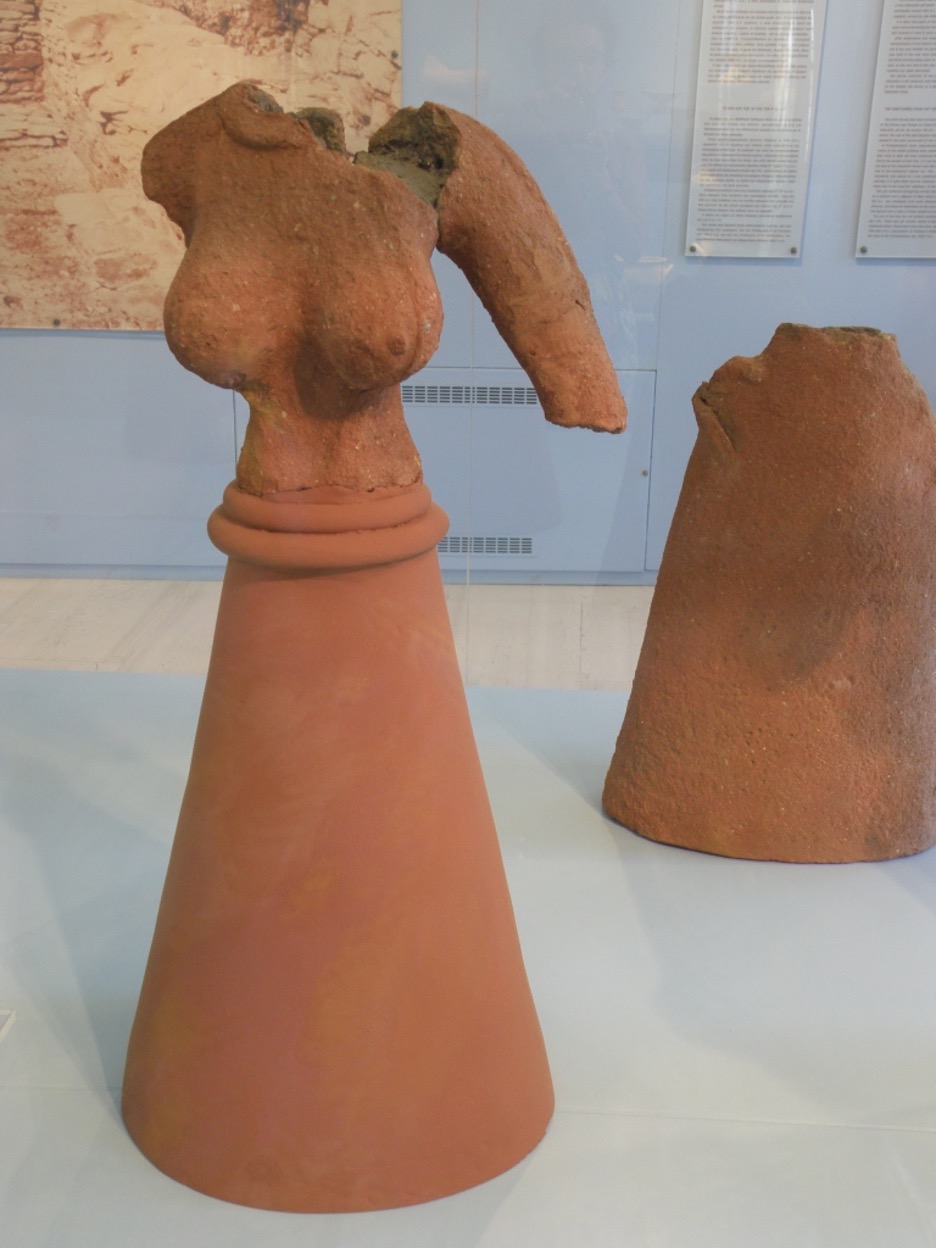
The Daughters of Kea are female figures in upright position. Their reflections on the glass of the showcases look longer with their skirts down to the floor. They bear girdles. Some wear heavy garlands or necklaces, their breasts are heavy, exposed. Their arms are mutilated at various lengths or cut from the shoulder; the missed hands would have reached around the waist.
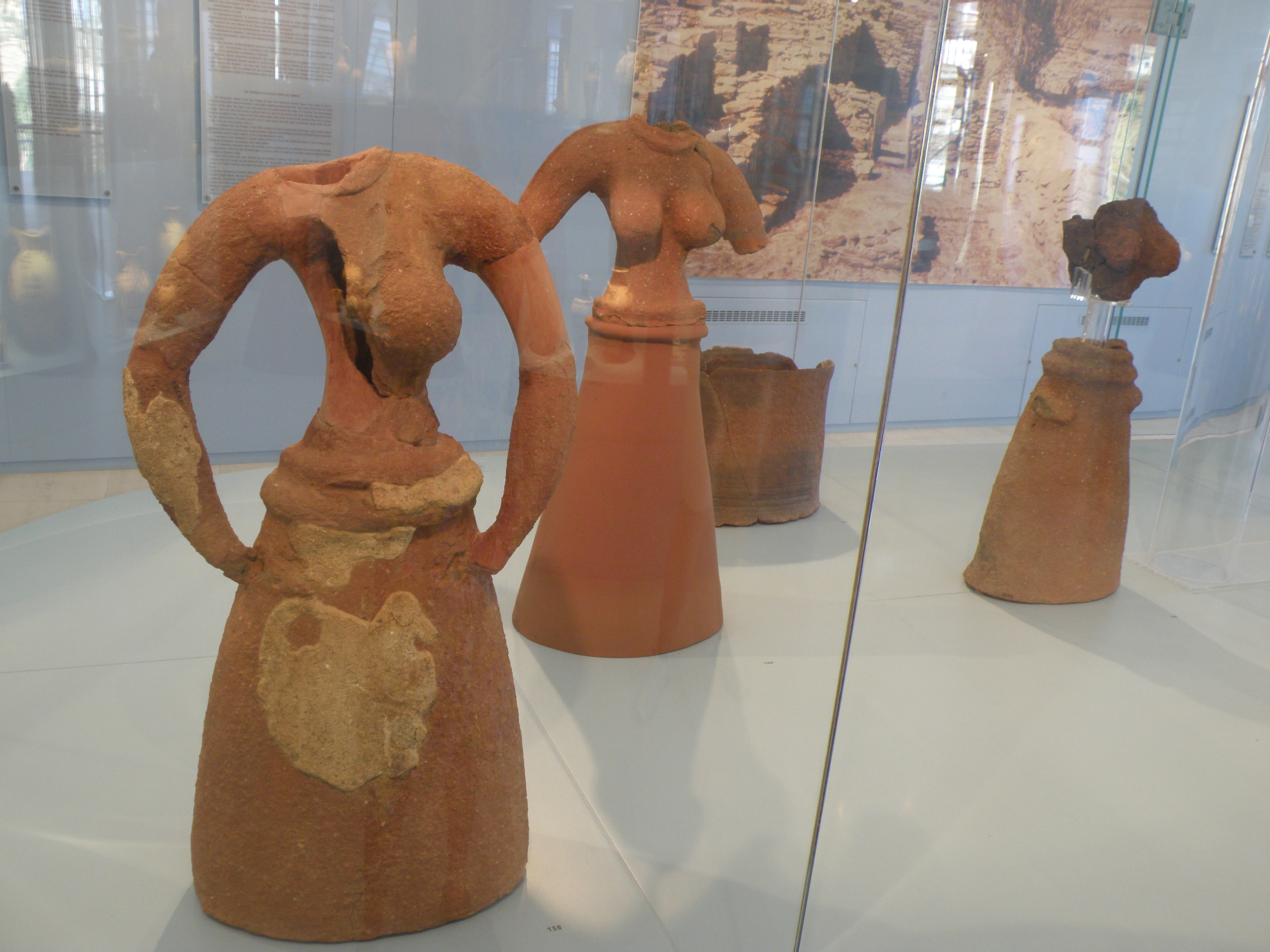
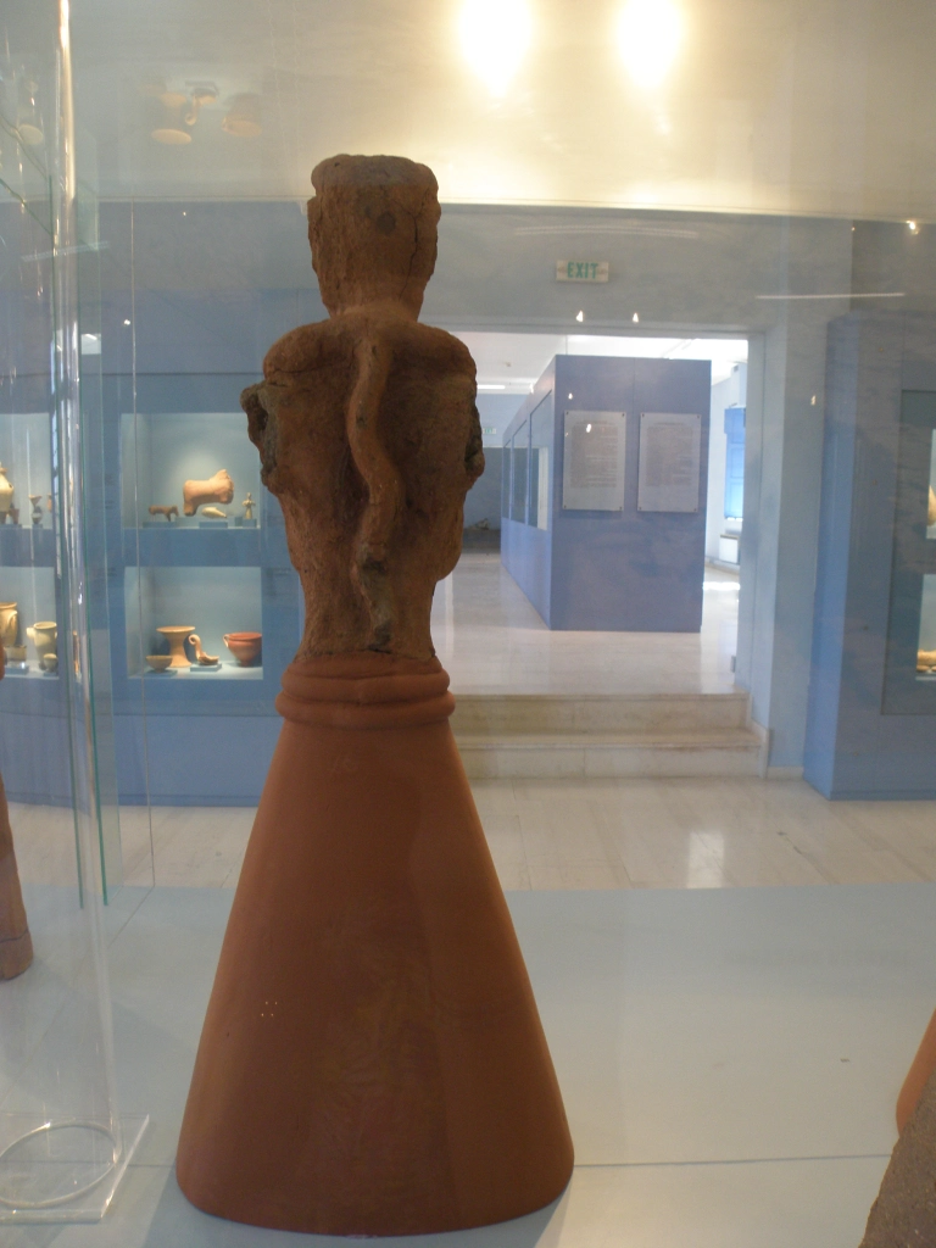
Only two of the women have heads on their shoulders, and faces. The hair form a crown above the forehead of the tallest and a long braid is evident at her back, like in some of her ‘sisters’. Once they were coloured.

The terracotta red brings in mind the earth, the soil that has been their hiding place for centuries at the archaeological site of Ayia Irini on the peninsula and the bay of Ayios Nicolaos.
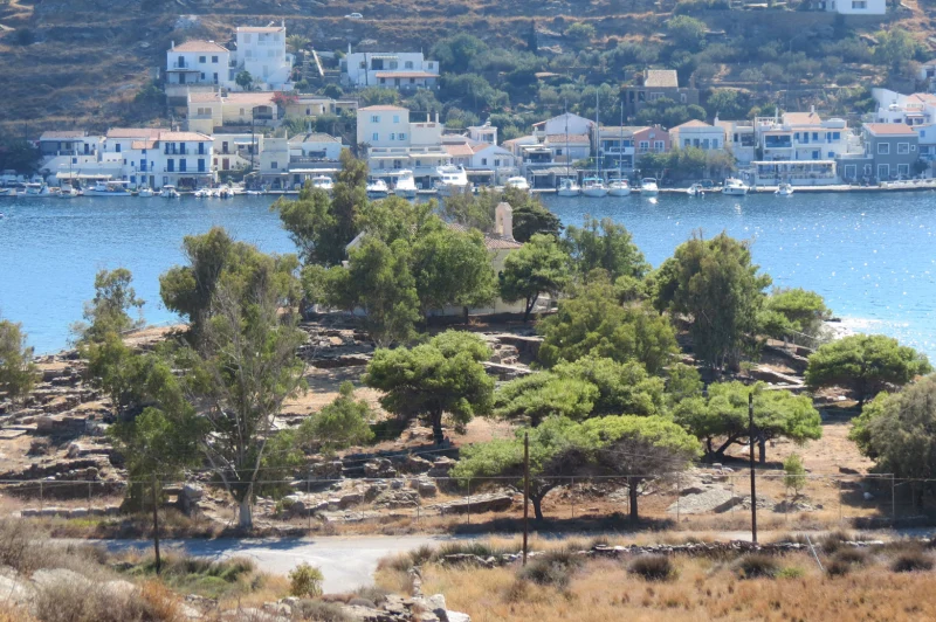
The Archaeological site is open for visiting. A guided visit joined by further reading widens our spetrum to other dimensions, the imagination too. It brings a sense of familiarity with the place and its history.
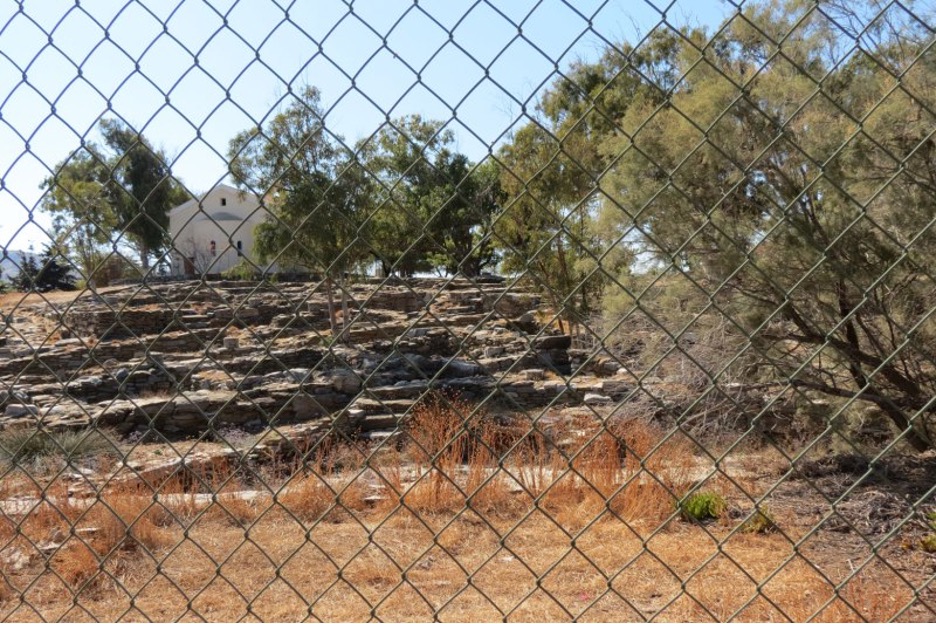
The archaeological site and the church of Ayia Irini attract the attention whether we sit at the coffee shops, bars and restaurants at the marina of Vourkari or at the ones of the nearby Ayia Irini.
Back at the Archeological Museum at Chora
I take photos. I am about to leave, I return, stand still staring at them. On the faces, on the lips of two of the Daughters of Kea and Ayia Irini/ Eirini who still have their heads, the ‘archaic smile’ has survived intact.
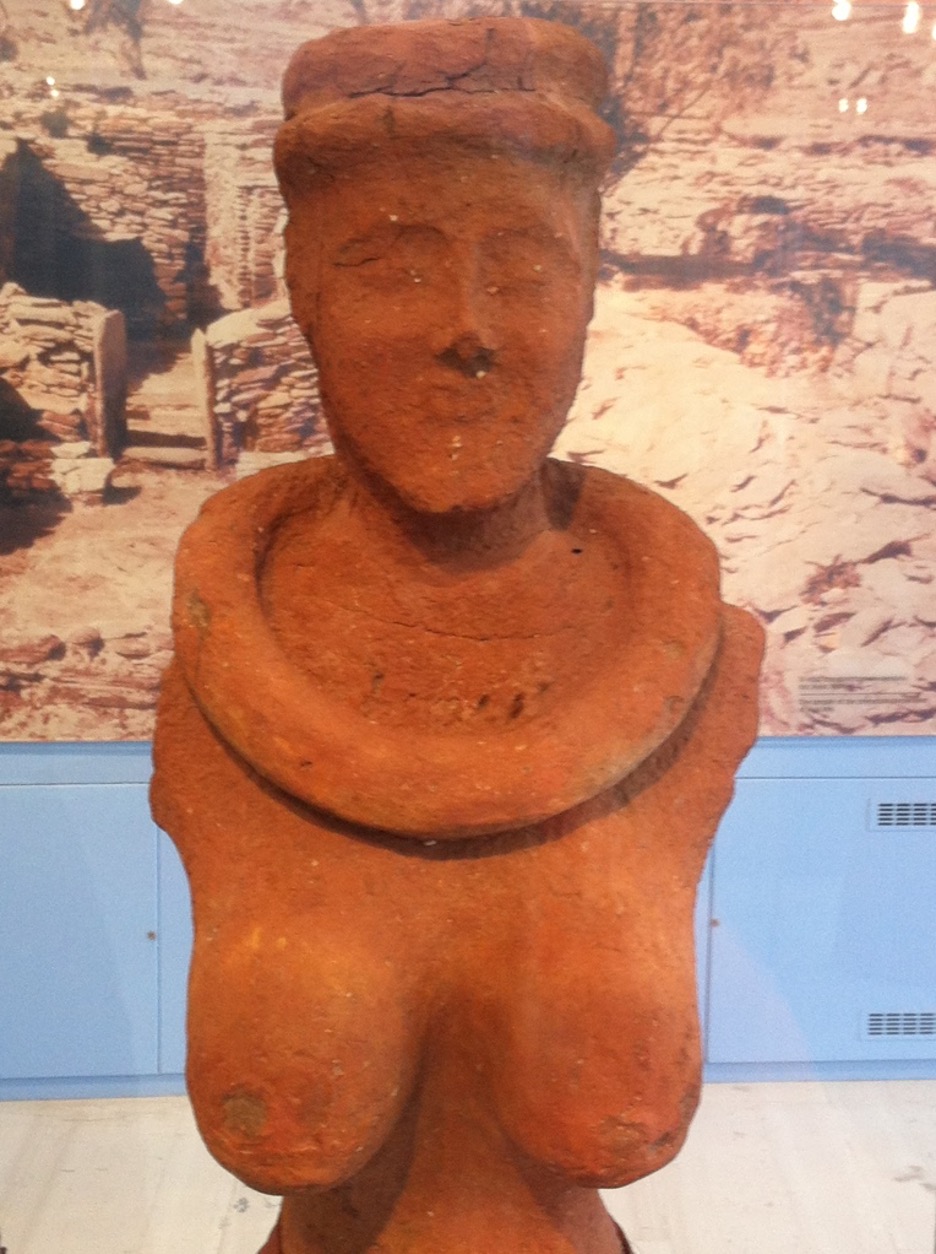
The fragments that were found in the area of the temple at the Archaeological site of Ayia Irini/Agia Eirini were supposed to form 40 το 50 statues.
In the showcases there are not more than a dozen.
The statues do not look similar in height or in the made. Their height ranges from 0,60 cm to the physical size of a woman.
Were they were not made in the same time or by the same ceramists?
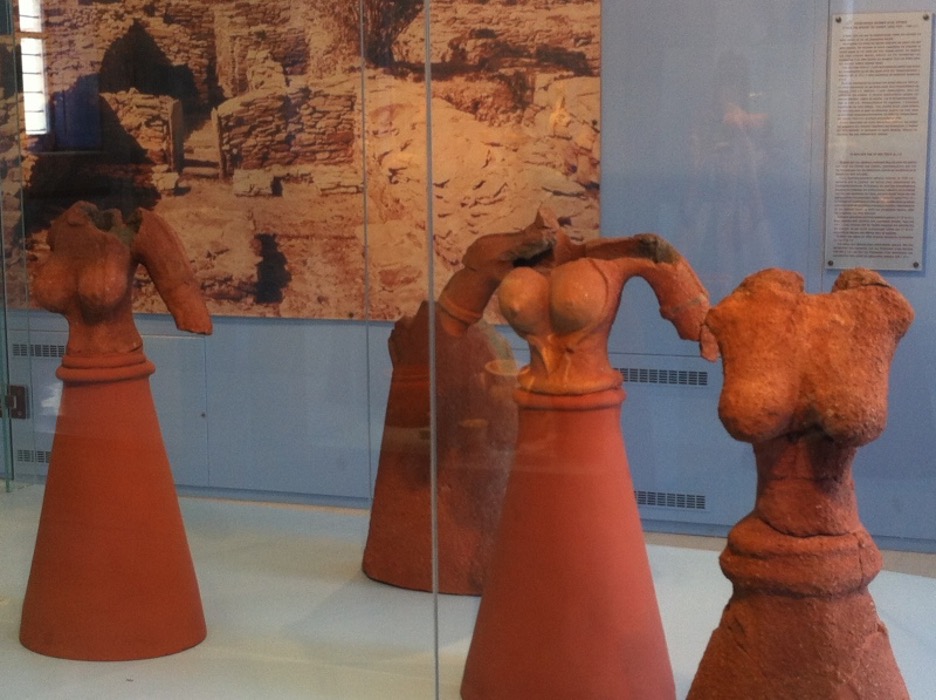
The Daughters of Kea represent goddesses, priestesses or votaries?
It is not clear whether they had been offered to the temple or they were accessories participating in rituals that would take place in the Temple until it was destroyed around 1450 B.C. at the end of the Late Cycladic ΙΙ Period (prehistoric).
Whatever the function or faith they had served, these survivors deserve to have a name, ‘the Daughters/Kores of Kea’.
Ayia Irini at the bay of Ayios Nikolaos, Kea island, Greece
The Archaeological Museum of Kea was founded in the ‘70s and has been renovated between 1997-2002.
Τhe terracotta female statues are housed at the second floor of the museum.
The female figurines are
The female figurines were put together from fragments that were found in the site around the emple during the excavations by the University of Cincinnati under the direction of John L. Caskey betwwen 1960 – 1976.
It is one of the most important settlements of the Aegean Sea; its duration from the Bronze Age until the end of Mycenaean (approx. 3000-1100 B.C.).
At the beginning of the 3d millennium BC, a settlement was established on a small peninsula at the bay of Ayios/Agios Nikolaos.
The church of Ayia Irini/Agia Eirini is adjacent to the site.
As testified from the pottery, the island of Kea had trade links with the mainland and other Greek islands. Here, as in other islands of the Cyclades, lead and copper deposits contributed to the prosperity of the communities.
Following a period when the site was abandoned in ruins from the Proto/Early Cycladic installment, during Middle Bronze Age (ca.2000/1900 BC) the settlement is inhabited again, and for the first time they built fortificatio walls.
At the east side of the settlementof Ayia Irini/Agia Eirini, a Temple was built which had been modified for over 1000 years.
The Late Bronze Age (1600-1100) was the most affluent phase of the settlement. Apart from the mainland Greece, the influence on pottery, on trade (the lead weights) include Kea in the Minoan commercial network of the Minoans.
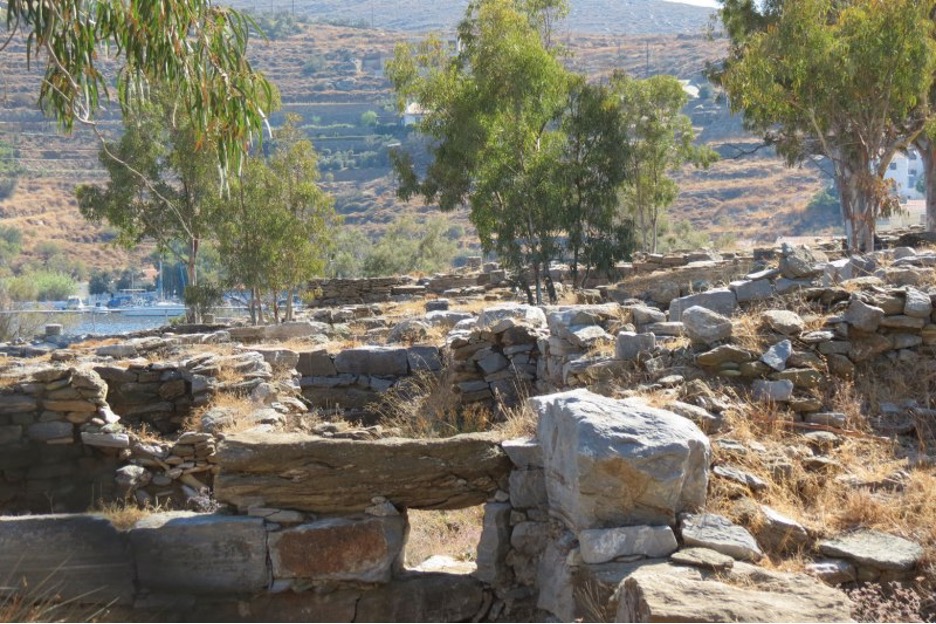
House A occupied the central part of the village. A building consisting of 24 underground apartments and 2 floors at some sections. The buildings were separated by narrow roads and below them extended elaborate drainage.
The Temple was of the most important buildings in the settlement with the longest history. The temple was used until (including) the Late Bronze Age. From findings, we can assume a cult of Bacchus in the temple of Kea before the geometric era.
The settlement was destroyed in 1450 B.C., 50 years after the eruption of the volcano at Thira (Santorini). Though the settlement has not regained its old glory, the site of the temple retained its importance and received votaries even in Hellenistic the times.
Sources:
KEA, History and antiquities, Ministry of Culture, Archaeological Receipts Fund, edition 2002
Instead of an Epilogue, Kouros of Kea
While these female statues remain mysterious and relatively unknown, the Kouros of Kea enjoys a great fame.
A remarkable sculpture of the archaic period (530 B.C.), Kouros was excavated at the site of the ancient town of Korissos, above the current settlement of Korissia (the port).
It is exhibited in the National Archaeological Museum of Athens. Its image is traveling around the world.
Kouros of Kea travelled to the States: if my information is correct, the statue of Kouros participated from spring 2013 to autumn 2014 in the Exhibition “The Greeks from the Agamemnon to Alexander the Great”. The exhibition comprised 564 works from Greek Museums and focused on the representation of the Greek face over the centuries from the 6,000 B.C. until the 2nd century B.C.
for further reading:
1. International Dictionary of Historic Places, Vol.3, Southern Europe, page 375 http://goo.gl/TWxCO2
2. The Temple at Ayia Irini: Mythology and Archaeology, by Robert Eisner http://grbs.library.duke.edu/article/viewFile/9541/4509
First published on 8 August 2012, last revised August 2024
Closing with a friendly reminder:
Regardless of your opinion about the blog and the post, you probably agree that respect for the work, the time, the energy and MERAKI (no English equivalent, renders the feeling of tender to passionate engagement) that each blogger invests, without financial or other returns, is a matter of honesty. The content of the blog is product of intellectual property covered by copyright.
Please refer to the source, that is my blog, when you share or repost is whenever you repost texts, photos, material or the post itself.
Thank you, wishing you happy travelling!
2013 ©Copyright. All rights reserved
Wander in the island of Kea/Tzia through my blog posts:
Walking the trail to the ancient Karthea
Take a walk
Archaeology, Mediterranean:
Athens hosts ‘Princesses’ of Mediterranean at the Museum of Cycladic Art
Narratives with my photos from Kea:
Walking by the sea after a long winter…
A tree is blooming at the island of Kea
Thank you to MIXANI TOU XRONOU referring to this blog post of ‘urban travel tales’ as one of its sources for their article; they have reposted my photos including the link.
For readers of Greek:


Leave a Reply